

A stoma support belt tends to solve problems you did not realize were wearing you down. The quick hand check under your shirt before a meeting. The way you sit a little stiffly in the car. The half second of doubt every time you pick something up off the floor.
None of these feel huge on their own, but they add up to a day spent thinking about your pouch. Those little sub-conscience moments can take away from your focus.
So what does a stoma support belt actually change? And is it worth wearing if your pouch mostly behaves? An ordinary day shows where support makes a difference.
In This Article
- What a Stoma Support Belt Does
- A Day With a Belt, Hour by Hour
- Signs You Could Use More Support
- What to Look For When Choosing
- Common Myths About Support Belts
- How to Get the Most From Your Belt
- Belts Designed by Someone Who Wears One
- Frequently Asked Questions
What a Stoma Support Belt Does
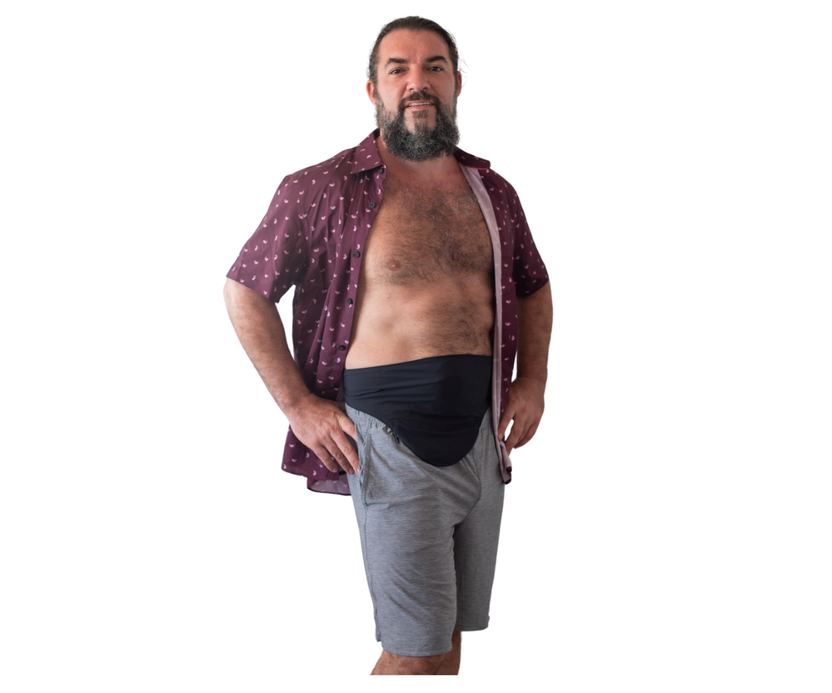
At its simplest, a stoma support belt is an adjustable band worn around your waist with an opening that fits around your flange. It holds the pouch snug against your body, which addresses a common mechanical problem the weight of pouch hanging and pulling against your skin.
Your wafer is designed to stick to skin, not to carry weight. As the pouch fills, gravity pulls on it. As you move, the pouch swings and tugs. Over hours, that pulling slowly works the adhesive loose, and the skin under it gets irritated.
A stoma support belt shares the load, so the seal only has to do its actual job, which is sealing. My guide to belts, barrier rings, and Brava strips lays out how each one handles a different piece of this puzzle.
Fit check: Start with short periods of wear and check your skin and wafer edge when you remove the belt. Comfort should remain consistent while sitting, bending, and walking. If the belt causes pressure, pain, discoloration, repeated leaks, or a change in stoma output, stop using it and ask a stoma care nurse to review the fit.
A Day With a Belt, Hour by Hour
Morning Routine
You change your appliance, shower, and get dressed. With a stoma support belt on, your pouch lies flat instead of hanging, so fitted shirts pants, or trousers sit more naturally. You are not tugging your top down in the mirror before you leave. You don't have to wear an oversized shirt or leave your shirt untucked to hide your pouch.
The Commute
Seat belts cross right over the belly, and potholes and sudden stops jolt everything. A stoma support belt keeps the pouch from shifting under the seat belt strap. Long drives feel less like something to manage and more like normal travel.
Work Hours
Whether you sit at a desk or spend the day on your feet, your pouch gets heavier as the hours pass. Sitting folds the pouch and can push output toward the seal. Standing lets it swing. A stoma support belt keeps it steady either way, so you can focus on your work instead of your wafer.
Lunch and Errands
After a meal, your waist expands a little. An adjustable belt lets you loosen it a notch. Then there is bending into the car, lifting shopping bags, pushing a cart, and reaching for high shelves. Each of these moves would normally make you pause. With a comfortable fit, support may make those movements less noticeable.
Workouts and Weekend Plans
Exercise is where a stoma support belt helps most. Running, swimming, cycling, and racquet sports all create bounce and twist. I gave a real answer on playing tennis with an ostomy, and it comes down to preparation and a belt built for side-to-side movement.
Family days count too. My story about the belt that saved the day at a water park with my kids shows this well. My appliance tore on a water slide, and the belt kept things together long enough for me to walk calmly to my spare supplies.
Evening and Bedtime
Rolling onto your pouch at night is a common fear. A snug stoma support belt keeps the pouch in place when you turn over, which can mean fewer wake-ups and less checking. Many people also find it helps with intimacy, since the pouch stays flat and out of the way. Intimacy was one of the bigger reasons I wanted to make sure everything stays in place and the pouch does not distract from a beautiful connection with another human.
Signs You Could Use More Support
You do not need a leak crisis to benefit from a belt. It might be time to try one if you:
- Feel the pouch pulling as it fills
- Notice the edges of your wafer lifting before change day
- Get red or sore skin around the stoma
- Avoid certain clothes because the pouch shows
- Hold back from exercise, travel, or playing with your kids
- Sleep lightly because you worry about rolling onto the pouch
If a few of these sound like you, a stoma support belt is a low-effort change with a good chance of helping. And if leaks or sore spots are already happening, this guide to leakage, bleeding, irritation, and other pouch issues explains what to check first.
What to Look For When Choosing
A good stoma support belt usually has these traits:
- Fit that adjusts. Your body changes through the day and over months. A wide range of adjustment means one belt keeps fitting.
- Sturdy build. Reinforced stitching and closures that hold matter, since this is something you wear daily, not now and then.
- Breathable fabric. You will wear it for long hours, so it should let air through and dry quickly.
- The right opening. It should match your flange size and never press on the stoma.
- Pouch position. Vertical keeps the drain at the bottom for easy emptying. Horizontal keeps the pouch flat to the side for movement and sleep.
Common Myths About Support Belts
"Belts are only for people with hernias." Not true. A hernia garment is a different, firmer product. A stoma support belt is for anyone who wants a steadier pouch, hernia or not.
"If my pouch rarely leaks, I do not need one." Leaks are only part of it. Wearing a stoma support belt can also mean less skin irritation, better sleep, and more freedom with clothes and exercise.
"They are hot and uncomfortable." Older, bulky designs could be. Modern belts use breathable, quick-dry fabric and slim profiles made for all-day wear.
How to Get the Most From Your Belt
A few simple habits help any stoma support belt work well:
- Put it on after the wafer settles. Give the adhesive a few minutes to warm and grip first.
- Empty at a third to half full. Less weight means less strain on both belt and seal.
- Keep it snug, not tight. Two fingers should slide under the band comfortably.
- Rotate two belts. One on, one in the wash. It keeps things fresh and extends the life of each.
- Recheck your size. After surgery recovery or weight changes, measure again above and below the stoma.
Belts Designed by Someone Who Wears One
I designed these belts myself, and I have worn and tested them through surfing, martial arts, and everyday family life. You can read more about me and my story here.
Vertical Belt for Desk Days and Commutes
The HIRO Performance Vertical belt keeps the pouch pointing down with the drain in its usual place.
- Great for routine days. It suits desk work, commutes, and post-op recovery, when you want things to feel familiar.
- Carries the load. It takes weight off the wafer as the pouch fills, helping reduce leaks and skin irritation.
- Grows with you. About 6 inches of adjustment per size handles meals, swelling, and weight changes.
Horizontal Belt for Active Weekends
The HIRO Performance Horizontal belt holds the pouch flat and to the side.
- Moves with you. It keeps the pouch out of the way during sport, gardening, driving, and golf.
- Handles water and sweat. The breathable, quick-dry fabric works for swimming and hot days.
- Sleep friendly. Side and stomach sleepers get a steadier pouch through the night.
Both styles come in sizes XXS to XXXL for left and right stomas, with free U.S. shipping and next-day dispatch.
Less Checking, More Living
Living with a stoma takes adjustment, and nobody expects you to have it all figured out on day one. This Cleveland Clinic piece on adjusting to life with an ostomy bag is a helpful read if you are still finding your feet.
But a lot of the daily friction comes from one simple issue: a pouch that moves and pulls when it should stay put. Fix that with a stoma support belt, and the rest of the day gets lighter.
For many people, the biggest change is mental. They check less, plan less around the pouch, and spend more time just living. Start with one normal day, notice how it feels, and build from there. Most people know within a week whether the extra support is making their routine calmer.
Frequently Asked Questions
1. Should I wear a belt every day?
Many people do, since the pouch pulls on the seal all day. Others wear one only for work, exercise, or sleep. Try both and see what feels best.
2. Will a belt show under my clothes?
A slim, well-fitted belt usually lies flat and stays hidden under most tops and dresses. It often makes the pouch less visible, since it keeps it from bulging out.
3. Can I swim while wearing a belt?
Yes, with the right fabric. A quick-dry, breathable belt holds the pouch flat in the pool or sea. Rinse it in fresh water afterward and let it dry fully before wearing it again.
4. Does a belt work with any pouch?
Most belts work with pouches that have belt tabs or a flange the opening can fit around. Check the opening size against your wafer before buying.
5. How do I clean my belt?
Follow the care label, but gentle washing and air drying usually keep the fabric and elastic in good shape. Having two means you always have a clean stoma support belt ready.