

An ostomy hernia belt usually comes up in one of two ways. Either your stoma nurse mentions it before you leave the hospital, or you notice a bulge around your stoma months later and start searching at midnight.
Either way, the questions tend to be the same. Is this bulge dangerous? Did I cause it? Can I still lift my kids, go to work, or play golf?
A parastomal hernia is common, often manageable, and rarely an emergency. Knowing what it is and how an ostomy hernia belt fits into the picture makes it much less scary.
In This Article
- What a Parastomal Hernia Actually Is
- Signs You Might Have One
- Who Is More Likely to Get One
- How an Ostomy Hernia Belt Works
- When to Wear Your Belt
- Getting the Right Fit
- Daily Habits That Take Pressure Off
- Everyday Pouch Support Is Not the Same as a Hernia Belt
- Frequently Asked Questions
What a Parastomal Hernia Actually Is
To create a stoma, the surgeon brings the bowel through an opening in the abdominal wall. That opening is a weak spot by design.
Over time, pressure from inside the belly can push loops of bowel or fatty tissue through the gap beside the stoma. The result is a bulge under the skin around your stoma.
It is one of the most common complications after ostomy surgery. Many people develop one within the first couple of years, though it can show up much later too.
It is not a sign you did something wrong. The abdominal wall simply has an extra weak point now, and daily pressure finds it.
Signs You Might Have One
A hernia does not always hurt. Many people spot it by look and feel first. Common signs include:
- A swelling around the stoma that gets bigger when you stand, cough, or strain
- The bulge shrinking or flattening when you lie down
- A dragging or heavy feeling near the stoma
- Wafers that suddenly stop sitting flat, leading to more leaks
- Trouble irrigating, if you irrigate a colostomy
If you are still unsure, UOAA's page Do I have a parastomal hernia? walks through the common signs and suggests support garments during strenuous activity.
When a bulge changes your belly shape, your usual pouch may no longer seal as well. If leaks have become a new problem, the guide on barrier rings and strips explains how to fill gaps on an uneven surface.
When to Get Help Fast
Go to urgent care or call your doctor right away if the bulge becomes hard, painful, and will not go back in, or if you have vomiting, a swollen belly, no output, or the stoma turns dark red, purple, or black. These can be signs the bowel is trapped, and that needs quick treatment.
Who Is More Likely to Get One
Anyone with a stoma can develop a hernia, but some things raise the risk:
- Heavy lifting, especially in the first few months after surgery
- A long-term cough from smoking, asthma, or lung conditions
- Carrying extra weight around the middle
- Straining from constipation
- Older age and weaker abdominal muscles
- Wound infection or slow healing after surgery
You cannot control all of these. But the ones you can influence, like lifting habits and coughing without support, are exactly where an ostomy hernia belt comes in.
How an Ostomy Hernia Belt Works
An ostomy hernia belt is a wide, firm band worn around the abdomen with an opening for your pouch. Some fasten with Velcro; others pull on like shorts or a tube. It applies even, gentle pressure to the muscles around the stoma. That support does two main jobs.
Support for Prevention
For people who do not have a hernia yet, the idea is to back up the abdominal wall during moments of high pressure. Lifting, bending, coughing, sneezing, and hard exercise all push outward on that weak spot.
A snug ostomy hernia belt may help spread pressure across a wider area. Research on prevention is still mixed, so ask a stoma care professional whether support is appropriate for you. A medical hernia belt should be assessed, measured, and fitted by a trained professional.
Support for Management
If you already have a hernia, an ostomy hernia belt will not close it or make it go away. What it can do is hold the bulge in, ease the dragging feeling, and give your pouch a flatter surface to stick to.
For many people, that means more comfort, fewer leaks, and more confidence getting through a normal day. Surgery is an option for some hernias, while some people manage symptoms with support, monitoring, and advice from their care team.
When to Wear Your Belt
Most people do not need to wear their belt every minute of the day. However, after you get used to wearing one many people often find that wearing it twenty-four seven is far more comfortable than not wearing a belt. Common times to put it on:
- Lifting groceries, laundry, kids, or anything heavy
- Gardening, cleaning, and other bending tasks
- Exercise, from brisk walking to the gym
- Long days on your feet at work
- Any time you have a cold or cough
- Long car rides or flights where you will be lifting bags
Many people take their ostomy hernia belt off at night, since lying down reduces pressure on the abdominal wall. Your stoma nurse can tell you what makes sense for your body. Keep in mind there are also lightweight versions for sleeping that make it much more comfortable than having your ostomy bag move around at night.
Getting the Right Fit
An ostomy hernia belt should be measured and ideally fitted with your stoma nurse, since the right firmness and width depend on where your stoma sits and how big any bulge is. A few basics:
- Measure lying down. Measure around your belly at stoma level while flat, when any bulge is at its smallest.
- Put it on lying down too. This lets the hernia settle back before the belt holds it in place.
- Check the pouch opening. The hole should let your pouch pass through freely without squeezing the stoma.
- Snug, not crushing. You should breathe normally and sit without the belt rolling or digging in.
A patient study on support garments for parastomal bulging found that poorly fitted garments made symptoms worse, while properly assessed ones improved daily life. So it is worth getting your ostomy hernia belt fitted in person.
Richard's guide on how to choose an ostomy belt makes the same point: talk with your surgeon first before buying any ostomy hernia belt.
Daily Habits That Take Pressure Off
An ostomy hernia belt works best alongside a few simple habits:
- Hug your belly when you cough or sneeze. Press a hand or pillow over the stoma area.
- Lift with your legs. Keep loads close to your body and avoid twisting while lifting.
- Build core strength slowly. Gentle exercises approved by a physical therapist can make a real difference.
- Stay on top of constipation. Water, fiber, and movement help cut down on straining.
- Watch your weight. Even small changes can reduce pressure on the stoma site.
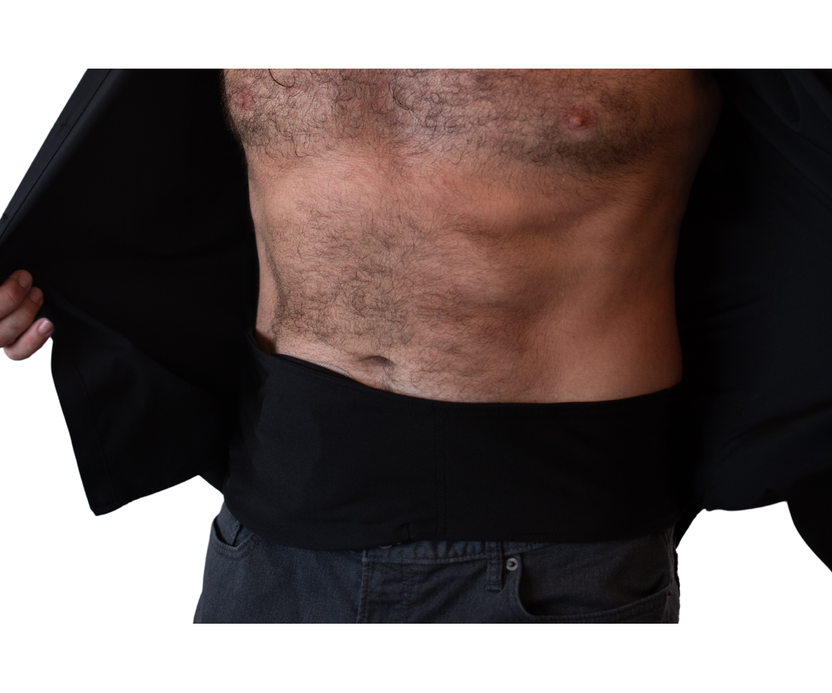
Everyday Pouch Support Is Not the Same as a Hernia Belt
To be clear, O'Hamill Inc. makes ostomy support belts, not medical hernia belts. HIRO belts give supportive, adjustable compression and keep your pouch secure, but they are not a hernia treatment. If you have a diagnosed hernia, follow your surgeon's advice on a dedicated ostomy hernia belt.
For daily pouch security and light support, these are worth a look.
Vertical Belt for Light Support During Recovery
The HIRO Performance Vertical belt keeps the pouch pointing down and holds it close to your body.
- Adjustable compression. About 6 inches of range per size lets you set the firmness you are comfortable with.
- Takes weight off the seal. Supporting the pouch as it fills reduces pulling on the wafer, which helps when a bulge makes sealing tricky.
- Post-op friendly. The standard downward position is familiar during recovery and easy for seated work.
Horizontal Belt for Chores and Walks
The HIRO Performance Horizontal belt keeps the pouch flat against your side.
- Stays put while you move. The side position cuts swinging during walks, golf, driving, and daily chores.
- Breathable fabric. It dries quickly, so it stays comfortable through sweaty days and even swimming.
- Wide size range. Sizes XXS to XXXL for left or right stomas, built with reinforced construction for daily use.
A Hernia Is Not the End of an Active Life
Many people find that once their ostomy hernia belt is fitted well, they stop thinking about the bulge most of the day. Richard O'Hamill, the ostomate behind HIRO, still surfs and trains with a stoma. With a well-fitted ostomy hernia belt, regular check-ins with your stoma nurse, and a bit of planning, most people keep working, traveling, and staying active.
And if a leak does catch you off guard because of a changing belly shape, you are not alone. Richard's leak story shows how common and survivable these moments are.
Frequently Asked Questions
1. Can a belt stop a hernia from forming?
It may help lower the risk by supporting your abdominal wall during lifting and coughing, but no belt can guarantee prevention. Good lifting habits and core strength matter too.
2. Will my hernia go away if I wear a belt?
No. A belt holds the bulge in and makes you more comfortable, but it does not repair the gap. Only surgery can close a hernia, and many people never need it.
3. Can I exercise with a parastomal hernia?
Usually yes, with your doctor's okay. Walking, swimming, and gentle core work are common choices. Avoid heavy lifting and straining, and wear your support garment for harder sessions.
4. Is an ostomy belt the same as a hernia belt?
Not quite. A standard ostomy belt mainly holds the pouch secure. A hernia belt is wider and firmer, designed to support the muscles around the stoma.
5. How soon after surgery should I start wearing one?
That depends on your healing and your surgeon's advice. Many nurses suggest support wear once your wound allows it, so ask at your follow-up about the right ostomy hernia belt for you. Personally, the people that I’ve worked with over the year’s who choose to wear a support belt immediately after surgery seem to have had a better outcome. They were quicker to become more active. They were more confident about moving around, and that led to a quicker recovery time. Each person is unique and everyone’s experience will be different. Feel free to reach out to me you’re my team.