

A stoma guard is one of those things most people never think about until the first time a toddler climbs onto their lap or a seat belt locks hard across their belly. Then the questions start.
Can a bump actually hurt my stoma? Is it safe to go back to the gym? Will my pouch get squashed if I kneel down in the garden? These are fair worries, and you are not overthinking them.
Your stoma is living tissue. It has no pain nerves in the usual sense, so you might not feel a knock right away, but it can still bruise, swell, or bleed. Add a full pouch and a wafer that is working hard to stay stuck, and a single bump can turn into a leak. This article walks through what a stoma guard does, when it makes the most sense, and how to set yourself up so active days feel normal again.
In This Article
- What a Stoma Guard Actually Does
- Where Bumps and Pressure Sneak Up on You
- A Guard Alone Is Not the Whole Answer
- How to Wear a Stoma Guard Comfortably
- Should Everyone Wear One?
- Belts That Keep Your Pouch Steady Under a Guard
- Small Habits That Make Active Days Easier
- Frequently Asked Questions
What a Stoma Guard Actually Does
A stoma guard is usually a firm, curved dome that sits over the stoma and pouch area, creating a pocket of space so pressure from outside does not press straight onto the tissue. Most are held in place by a belt, a wrap, or a snug waistband.
The goal is simple:
- Spread out a hit so it lands on the shield and not on the stoma.
- Keep the pouch from being flattened, which can push output back toward the seal.
- Give you one less thing to brace for when you move.
A stoma guard does not replace your pouching system, and it does not stop leaks on its own. It works best as part of a setup that also keeps the pouch steady and the wafer secure.
Where Bumps and Pressure Sneak Up on You
Most knocks do not come from dramatic accidents. They come from ordinary life.
Everyday Moments
- Seat belts during sudden stops
- Kids and pets jumping into your lap or onto your side
- Leaning against a counter, desk edge, or shopping cart handle
- Crowded buses, trains, and concert floors
- Tight waistbands on work trousers
Sports and Physical Jobs
Contact sports like martial arts, rugby, or basketball are the obvious ones. The American Cancer Society's advice on staying active with an ostomy points out that a direct hit can injure the stoma, and that protective gear may help lower that risk. But plenty of low-key activities also put pressure on the belly.
Think golf swings, yard work, lifting boxes, kneeling to tile a floor, or even a long hike with a hip belt on your backpack. If you want to see how I handle fast, twisting movement, I wrote about whether you can play tennis with an ostomy from my own time on the court.
These are the moments a stoma guard is made for, when you cannot control what bumps into you.
A Guard Alone Is Not the Whole Answer
A stoma guard protects against impact, but most problems during active days come from movement, not from being hit. As you walk, bend, and twist, a pouch that hangs loose swings and pulls on the wafer. As it fills, it gets heavier and drags down on the seal. That constant tug is what loosens adhesive and irritates skin over time.
That is why many people pair a stoma guard with a well-fitted support belt. The belt holds the pouch close to the body, carries part of its weight, and keeps the stoma guard from sliding around. Together they cover both problems: outside pressure and inside movement.
If leaks and sore skin have already been a problem for you, my guide on leakage and skin irritation explains how rings, strips, and belts each do a different job.
How to Wear a Stoma Guard Comfortably
Getting the fit right matters more than which stoma guard you choose. A few tips that help most people:
- Check the opening size. The dome needs to clear your flange and pouch without pressing on the edge of the wafer. If it presses on the wafer, it can lift the seal.
- Empty before you start. A half-full pouch under a stoma guard has less room to move. Emptying before sport or a long drive gives everything space.
- Keep the belt snug, not tight. You should be able to breathe deeply and bend forward without the belt digging in.
- Test at home first. Wear your stoma guard around the house, climb stairs, crouch, and twist before you take it to a game or a job site.
- Watch your skin. Any redness where the edges of the stoma guard or belt sit is a sign to adjust the fit or add a softer layer.
Should Everyone Wear One?
Not necessarily. Plenty of people get through normal days with just a good pouch and a support belt. A stoma guard makes the most sense if you:
- Play contact or high-movement sports
- Work a physical job with lifting, kneeling, or tools near your waist
- Have young kids who treat you like a climbing frame
- Are healing from surgery and feel nervous about knocks
- Have a stoma that sits near your belt line or a seat belt path
If your stoma bleeds more than a little spot after a bump, stays swollen, or changes color, call your stoma nurse or doctor. A shield lowers the odds of that happening, but it cannot prevent every injury.
Belts That Keep Your Pouch Steady Under a Guard
A stoma guard protects from the outside, but you still need something that keeps the pouch steady underneath. I designed these two belts around my own life as an ostomate who surfs, trains, and chases my kids, and they fit well into an active routine.
Horizontal Belt for Twisting and Contact Sports
The HIRO Performance Horizontal belt holds the pouch flat and off to the side, which keeps it out of the way when you bend and twist.
- Built for movement. The side position helps during sports, driving, golf, and side sleeping, when a hanging pouch would swing.
- Quick dry and breathable. The fabric handles sweat and water, so you can wear it for swimming and long, hot days.
- Room to adjust. About 6 inches of range per size lets you tighten or loosen as your body changes through the day.
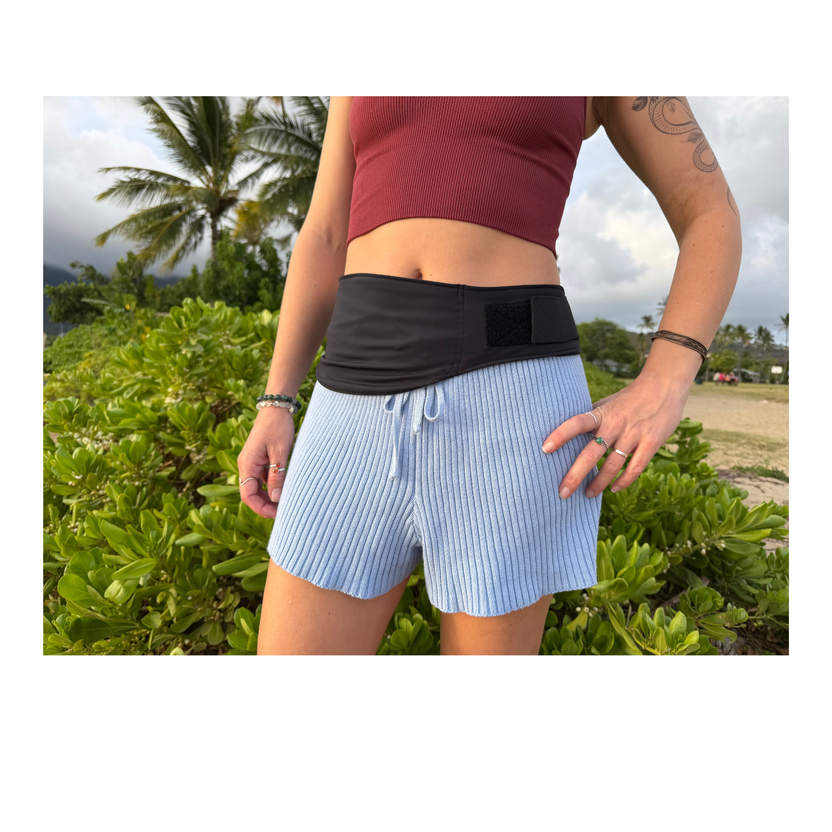
Vertical Belt for Recovery and Workdays
The HIRO Performance Vertical belt keeps the pouch pointing down, so the drain stays where you expect it.
- Takes weight off the wafer. It supports the pouch as it fills, which cuts down on the drag that loosens seals.
- Great for recovery and desk days. The standard downward position is familiar after surgery and comfortable for seated work.
- Made for daily wear. Reinforced construction and sizes from XXS to XXXL, for left or right stomas, with two flange opening options.
Neither belt is a hard shield, so if impact is your main worry, wear your stoma guard with one of these rather than instead of one.
Small Habits That Make Active Days Easier
- Carry a spare kit. A fresh pouch, wafer, wipes, and a spare belt in a small bag turn a surprise into a quick fix. The same packing logic applies when traveling with an ostomy, where two full changes in your carry-on is a smart baseline.
- Plan around big days. Change your appliance the night before a match or a long trip, not the morning of, so the adhesive has time to settle.
- Start with lighter activity. Ease back into sport after surgery with walking, cycling, or pickleball before full contact. This guide to physical activity with an ostomy also shares gentle core exercises that help rebuild strength.
- Know your exits. Knowing where the nearest bathroom is lets you relax and enjoy yourself.
I learned many of these lessons the hard way. My story about a trip to a water park with my kids shows how a spare kit and a secure belt kept a torn appliance from ruining the day.
Getting Back in the Game
The fear of getting bumped is real, but it does not have to shrink your life. With a stoma guard for outside knocks, a support belt for inside movement, and a few smart habits, most people get back to the things they love. Gardening, lifting grandkids, playing sport, and road trips are all still possible.
Take it one step at a time. Try your setup at home, then on a short outing, then on a full active day.
Frequently Asked Questions
1. Can a bump damage my stoma?
Yes, it can. A hard knock can bruise or cut the stoma or cause minor bleeding. Most small bumps heal on their own, but ongoing bleeding, swelling, or color changes need a call to your stoma nurse.
2. Do I need a stoma guard for the gym?
It depends on what you do. For weightlifting with belts or bars near your waist, or for contact training, a guard adds a layer of protection. For cardio and light weights, a snug support belt is often enough.
3. Can I wear a stoma guard with a support belt?
Most people do. The belt keeps the pouch close and steady, and the guard protects against impact. Make sure the guard does not press on the edge of your wafer.
4. Should I wear a guard while driving?
It can help if your seat belt crosses your stoma. Position the belt above or below the stoma where you can, and a guard will spread the pressure if the belt locks in a sudden stop.
5. How do I know if my guard fits well?
It should sit over the stoma without touching it, stay put when you bend and twist, and leave no red marks after a few hours. If it shifts or rubs, adjust your belt or try a different size of stoma guard.