

An ileostomy belt often feels like an afterthought when you first come home from the hospital. You are focused on learning to empty, change, and trust your pouch. Then the pouch fills faster than you expected, it feels heavy by mid-afternoon, and every time you bend over you wonder if the seal is about to give.
These worries are common with an ileostomy, and there are good reasons for them. Most have simple fixes, and a well-chosen ileostomy belt is one of the easiest. This guide covers what makes one comfortable, what makes one secure, and how to find a fit that works for your body.
In This Article
- Why an Ileostomy Needs Different Support
- What Makes a Belt Comfortable
- What Makes a Belt Secure
- Vertical or Horizontal: Which Suits an Ileostomy?
- Wearing Your Belt Day and Night
- Sizing It Right in Five Steps
- Two Belt Styles Worth Trying With an Ileostomy
- Small Tweaks That Help
- Frequently Asked Questions
Why an Ileostomy Needs Different Support
An ileostomy belt needs to support a stoma that may behave differently from a colostomy. With an ileostomy, output comes from the small intestine, so it tends to be:
- Looser and more liquid, which means it spreads toward the seal more easily
- More frequent, often needing emptying five or more times a day
- Rich in digestive enzymes, which can irritate skin fast if output sneaks under the wafer
- Heavier through the day, since the pouch fills quicker than with a colostomy
Put those together and you get the main challenge. A filling pouch pulls down on the wafer, and liquid output is quick to find any gap. That combination is why leaks and sore skin can show up in the first months. A properly fitted ileostomy belt may help by taking some weight off the seal and holding the pouch closer to your body.
Fit check: Check the fit while sitting, standing, bending, and walking, not only while facing a mirror. The belt should support the pouch without pressing on the stoma or lifting the wafer edge. If leaks, pain, skin irritation, or output changes continue, pause adjustments and ask a stoma care nurse to review the appliance and belt together.
If you want to understand the layers under the belt, like rings, strips, and two-piece systems, my guide to pouching systems covers how each one helps.
What Makes a Belt Comfortable
Comfort is personal, but a few things make a big difference for most people wearing an ileostomy belt every day.
Soft, Breathable Fabric
You will likely wear your ileostomy belt for hours at a time. A fabric that lets air through and dries quickly keeps sweat from building up under the belt, which also protects the skin around your wafer.
Room to Adjust
Your waist changes after a meal, through the day, and during recovery. An ileostomy belt with a wide adjustment range lets you loosen up after dinner and tighten again before a walk, without buying a new size.
No Pressure on the Stoma
The opening should fit around your flange cleanly. It should never press on the stoma or push into the edge of the wafer, since that can lift the seal.
Low Profile Under Clothes
A slim belt disappears under a shirt or dress, which matters a lot for confidence at work or out with friends.
What Makes a Belt Secure
Comfort keeps you wearing the belt. Security is why you wear an ileostomy belt in the first place. UOAA's guide to living with an ileostomy notes that adjustable elastic belts may improve how well a pouching system sticks and stays supported. Look for:
- Reinforced stitching at the points that take the most strain
- Closures that stay put when you bend, sit, and twist
- Even support across the pouch, so weight is not hanging from one spot
- A snug hold during sleep, when you might roll onto the pouch
An ileostomy belt that combines these features gives you a buffer. I found this out during a church service when my appliance started leaking. In my post on living with an ostomy, I explain how my belt kept things contained long enough to finish the service and change calmly.
Vertical or Horizontal: Which Suits an Ileostomy?
Belts usually hold the pouch in one of two positions, and each has a place.
Vertical keeps the pouch pointing down, just like it came out of surgery. The drain sits at the bottom, so emptying feels natural. This is often the go-to for recovery, office days, and anyone who empties often, which is most people with an ileostomy.
Horizontal turns the pouch to the side and holds it flat. It stays out of the way during sport, driving, and bending, and it suits side and stomach sleepers. You will need to loosen it slightly or angle the pouch to empty.
Plenty of people own both styles of ileostomy belt and swap depending on the day.
Wearing Your Belt Day and Night
During the Day
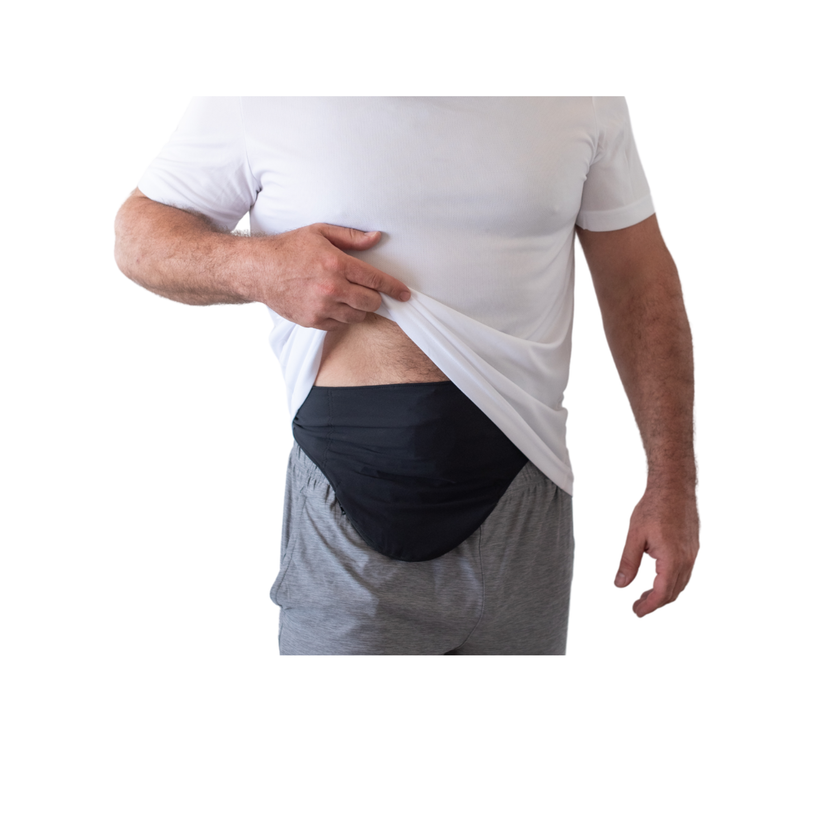
Put your ileostomy belt on after you change your appliance, it's actually helpful to hold the appliance against your body right after applying a new one while the adhesive is still setting. Empty your pouch when it is about a third to half full when possible. With liquid output, that keeps weight down and puts less stress on the seal. Sometimes you just get delayed due to traffic, long lines at a sporting event, bathroom out of order. Honestly those are some of the times having a belt truly saved the day for me and everyone around me.
At Night
Night can be the most nerve-wracking time. Output continues while you sleep, and rolling over can press or pull on the pouch. A snug ileostomy belt keeps things in place, and a horizontal style is often more comfortable if you sleep on your side. Some people also set an alarm to empty once during the night in the early months.
When You Travel
Long trips mean sitting for hours and fewer chances to empty. A belt that holds the pouch flat and secure helps a lot. My post on traveling with an ostomy has solid tips on airport security and packing, including carrying at least two full changes in your carry-on.
Sizing It Right in Five Steps
Sizing an ileostomy belt is easier than it sounds:
- Measure above and below your stoma. Use a soft tape around your waist at both spots, then average the two numbers.
- Pick the size that puts you mid-range. That way you can adjust up or down as your body changes.
- Choose your flange opening. Match the belt opening to the size of your wafer's coupling ring.
- Test it for a full day at home. Sit, stand, bend, and eat a meal. Note any rubbing or loosening.
- Adjust, then adjust again. As I put it in my guide on how to choose an ostomy belt, the right fit is often something you discover rather than nail on the first try.
Two Belt Styles Worth Trying With an Ileostomy
I designed these two belts as an ostomate who wears one every day, and both suit the demands of an ileostomy. Either one works well as an everyday ileostomy belt.
Vertical Style for Frequent Emptying
The HIRO Performance Vertical belt keeps the drain right where you expect it.
- Easy, frequent emptying. The downward position makes emptying five or more times a day simple, without loosening anything.
- Takes weight off the wafer. It supports the pouch as it fills, which matters with fast ileostomy output.
- Adjusts with your body. About 6 inches of range per size handles meals, swelling, and weight changes.
Horizontal Style for Side Sleepers
The HIRO Performance Horizontal belt holds the pouch flat against your side.
- Better for sleep. It keeps the pouch steady for side and stomach sleepers.
- Quick-drying fabric. Breathable material stays comfortable through sweaty days and handles swimming too.
- Stays secure in motion. It keeps the pouch from swinging during sports, driving, and work.
Both come in sizes XXS to XXXL for left or right stomas, with two flange opening options.
Small Tweaks That Help
A few habits make any ileostomy belt work better:
- Stay hydrated. Ileostomy output pulls water out of your body, so sip fluids and add electrolytes on hot days.
- Thicken output with food. Bananas, white rice, oats, and peanut butter can make output less runny and easier on the seal. These ileostomy diet guidelines from Memorial Sloan Kettering list more foods that help.
- Wash your belt often. A clean belt is kinder to your skin and keeps its stretch longer.
- Keep a spare. Having a second belt means you are never stuck while one dries.
- Check your skin weekly. Look for redness under the belt edges, which usually means it needs loosening or repositioning.
Feeling at Home in Your Body Again
Fewer leaks are only part of the goal. The rest is a life where your pouch is a small part of your day. A comfortable, secure ileostomy belt helps you get there, whether that means sleeping through the night, sitting through a long meeting, or getting back to the gym.
Frequently Asked Questions
1. Do I need a belt with an ileostomy?
Not everyone needs one, but the majority of people with an ileostomy find it helps significantly with heavy, fast-filling pouches, leaks, and confidence. It is worth trying if you worry about your seal. Think of it this way. Do you need shoes to go for a jog? Do you need a car to drive to work? We can live without those things but most people see the benefit and comfort aded to our lives by making our lives easier and more comfortable.
2. How tight should my belt be?
Snug enough to hold the pouch close, loose enough that you can slide two fingers under it and breathe deeply. It should never press on the stoma itself.
3. Can I sleep in an ileostomy belt?
Yes. Many people sleep in one to keep the pouch steady when they roll over. A horizontal style is often more comfortable for side sleepers.
4. Will a belt stop all leaks?
No belt can promise that. It lowers the strain on your seal, but a good wafer fit, barrier rings, and emptying on time all play a part. The nature of wearing on ostomy pouch means everyone will get a leak eventually. Just like if you wear the same shoes forever they will eventually get hole. The goal is to reduce the frequency of leaks and keep our skin as healthy as possible.
5. How often should I replace my belt?
It depends on wear and washing. Replace it when the elastic loses its stretch or the closures stop holding, since a worn-out ileostomy belt will not give you the same support. Just like socks or underwear you can wear the same ones for ever but it's nice to get a new fresh one every 6 months or so that way you always have fresh and clean ones at the ready.